Kabuki is Japan’s most theatrical performing art — a 400-year-old tradition that fuses acting, dance, live music, elaborate costume, and mechanical stagecraft into one overwhelming sensory experience.
What makes kabuki so distinctive isn’t just its classic stories — it’s a whole set of techniques and conventions found nowhere else in theater. This guide walks through the key features that define kabuki, organized by acting, stagecraft, music, and costume, so you know exactly what to look for on your next visit.
Acting Techniques
Mie — Kabuki’s Signature Freeze
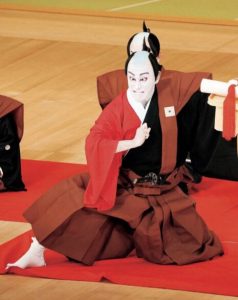
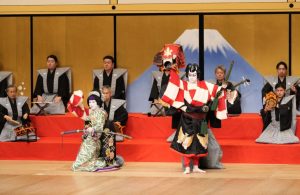
Mie is kabuki’s most iconic acting technique: the actor aligns body, angle, and gaze with total precision, then freezes at the emotional peak of a scene — condensing all the momentum of the moment before releasing it toward the audience in a single held pose.
The pause right before the freeze (called tame) and the actor’s breath during the stillness are both critical to how powerful the moment feels. A mie also means something different depending on where it happens — the hanamichi runway, center stage, or the shichi-san point carry different weight — and the exact posture varies by acting family, carrying that family’s own artistic lineage.
Famous examples include Benkei in Kanjinchō, Sukeroku in the play of the same name, and Kamakura Gongorō in Shibaraku. When a mie lands, shouts of “Naritaya!” from the audience are part of the tradition.
Roppō — The Power Walk
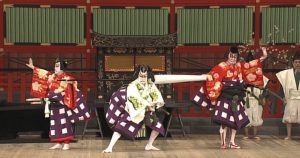
Roppō is a distinctive stylized walk used by aragoto (bold-style) characters: large swinging arm movements and forceful, stamping steps that express raw physical power. It’s especially associated with the Ichikawa acting family’s aragoto tradition, and it demands serious physical skill and stage presence — far more than it might look like at first glance.
Keren — Spectacle Built to Shock
Keren refers to flashy, crowd-pleasing stagecraft: wire-assisted flying, instant costume changes (hayagawari), and large mechanical set pieces built purely for visual impact. Keren reflects kabuki’s roots as popular entertainment for the masses, and it’s a tradition still very much alive in modern productions like Super Kabuki.
Tachimawari — Combat Built to Look Beautiful
Tachimawari are kabuki’s stylized fight scenes, choreographed with a strong sense of rhythm and visual beauty. No blows actually connect, yet the scenes carry real physical intensity — a real showcase of an actor’s athleticism and stage skill.
Stage Features
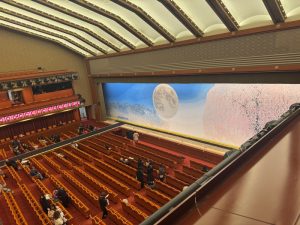
Hanamichi — The Runway Through the Audience
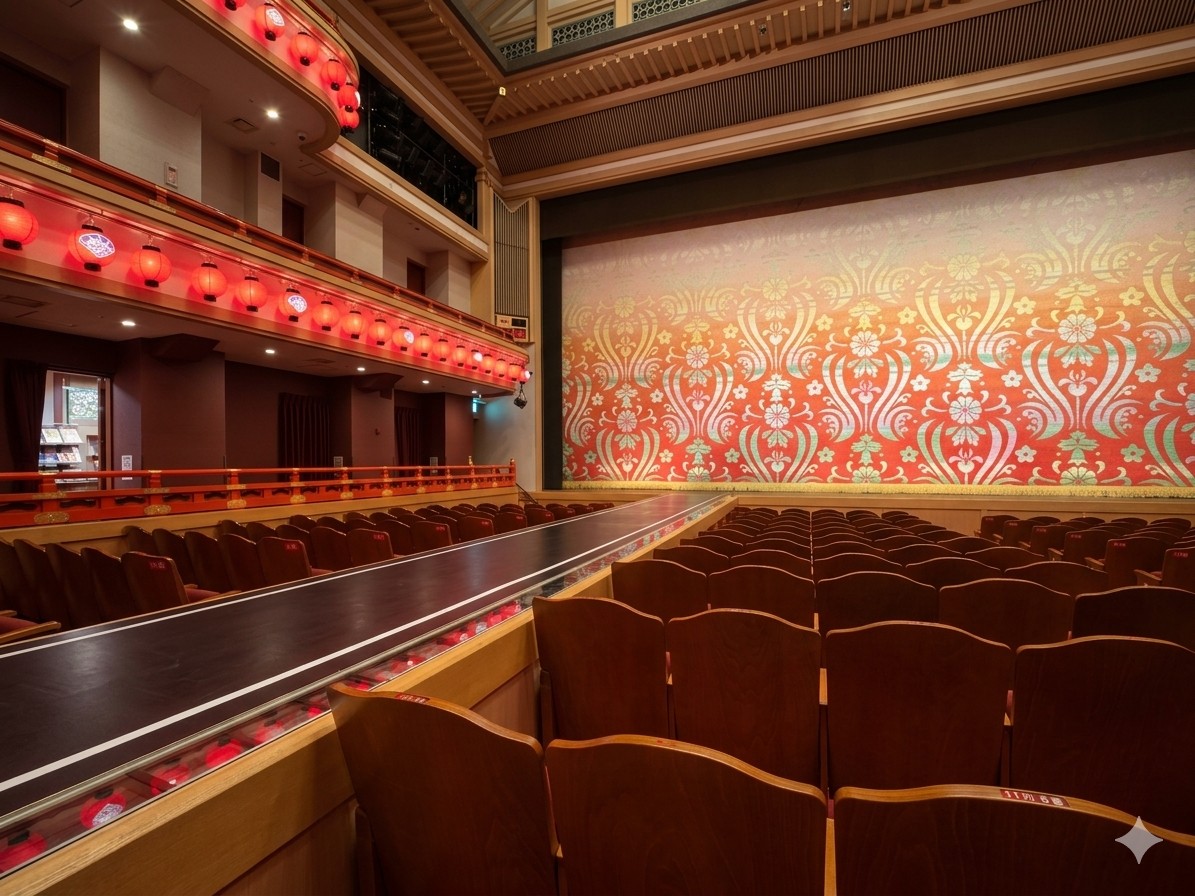
The hanamichi is a raised walkway that cuts straight through the audience, functioning as a “second stage” that stretches and compresses the story’s sense of time and space. It’s far more than a passageway — it carries a character’s emotional shifts, builds tension, and adjusts the emotional distance between actor and audience.
The point called shichi-san (“seven-three”), roughly 70% of the way down the hanamichi from the stage, is where the sightlines of the whole theater converge most intensely — a mie or a key line delivered there can instantly change the atmosphere of the entire room.
Mawari-Butai — The World’s First Revolving Stage
One of kabuki’s most celebrated stage devices is the mawari-butai — a rotating stage that allows entire scenes to change smoothly and instantly. Invented in the Edo period, this mechanism later influenced theater design in the West as well. Rotating the stage gives scene transitions a visual sense of motion and keeps the story’s pacing tight.
Seri — The Rising Trap Stage
Seri is a mechanism that raises and lowers sections of the stage floor, used for sudden entrances and disappearances — perfect for monsters, ghosts, and dramatic climaxes. It’s one of the key devices kabuki uses to create its distinctive sense of the uncanny and leave a strong impression on the audience.
Kurogo — The Stagehands in Black
Kurogo are stage assistants dressed head to toe in black, treated by convention as “invisible” to the audience. They hand props to actors, help with instant costume changes, and support performers’ movements from just out of focus — an unseen presence essential to kabuki’s seamless staging.
Music
Nagauta — The Core of Kabuki Music
Kabuki music runs on several coexisting systems, each shaping the story’s sense of time in a different way. Nagauta paints the emotional atmosphere of a scene; takemoto (gidayū-bushi narrative singing) supports the psychological depth of the story as a narrator; and hayashi (percussion and instrumental accompaniment) builds tension and momentum. None of these work in isolation — together, they form a layer of “sound direction” that shapes the rhythm and emotional waves of the performance in constant dialogue with the actors’ movement.
Narimono — Sound Effects
Narimono covers instruments like taiko drums, flutes, and hand drums, used to create atmosphere: rain, wind, thunder, rising tension, or a triumphant entrance. This “sound design” layer is indispensable to the overall staging.
The Bunraku Connection
Kabuki has deep historical ties to bunraku (traditional puppet theater) — much of kabuki’s narrative music and storytelling technique was directly adapted from jōruri, bunraku’s narrative singing tradition, enriching kabuki’s own expressive range.
Costume and Makeup
Kumadori — Makeup That Reveals Character Through Color
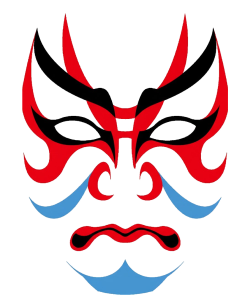
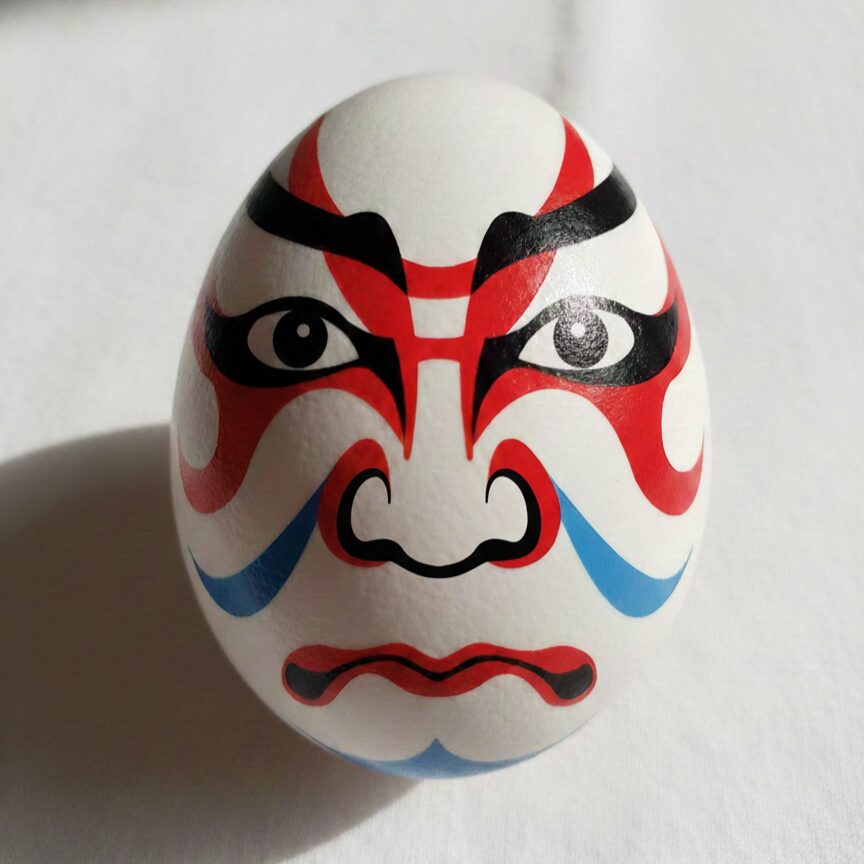
Kumadori paints exaggerated lines onto the face to represent muscle and the flow of blood or energy, visualizing a character’s inner nature and the direction of their power. The colors aren’t arbitrary — red represents an outward release of power, blue represents cold or shadowy malevolence, and brown represents savagery or the supernatural. Line thickness, angle, and placement are all adjusted to each actor’s face and character, so the same named kumadori can look strikingly different from performer to performer.
Lavish Costumes
Kabuki costumes are famous for their opulence — heavy use of embroidery and gold thread. Costume design communicates a character’s rank and personality while making the stage visually spectacular.
The Symbolism of Color
Color carries meaning throughout kabuki: red for passion and virtue, blue for coldness and villainy, black for authority, white for purity and nobility. Once you know these associations, the way you read the stage changes completely.
Why Knowing These Features Makes Kabuki More Enjoyable
- You understand the story more deeply — knowing why a character moves or dresses a certain way explains the story itself
- You start to see the actor’s skill — mie, roppō, and tachimawari all become visible as demonstrations of real technique
- Stage mechanisms become meaningful — the mawari-butai and hanamichi stop being scenery and start reading as deliberate direction
Frequently Asked Questions
- What’s the single most important feature to know before my first kabuki show?
-
Kumadori makeup and mie poses are the fastest way in — reading red as heroic and blue as villainous, and watching for the frozen “mie” pose at emotional peaks, makes the story immediately easier to follow.
- Is the revolving stage (mawari-butai) still used in modern theaters?
-
Yes. It was invented in the Edo period specifically for kabuki and remains standard equipment in major kabuki theaters today, and it went on to influence theater design in the West as well.
- Why are the kurogo stagehands dressed in black?
-
Black signals to the audience, by theatrical convention, that they should be treated as “not there” — allowing them to assist with props and costume changes in full view without breaking the illusion of the scene.
Explore Each Feature in Depth
Want to go deeper on any of these? Start here:
🎭 Want to See Kabuki Live?
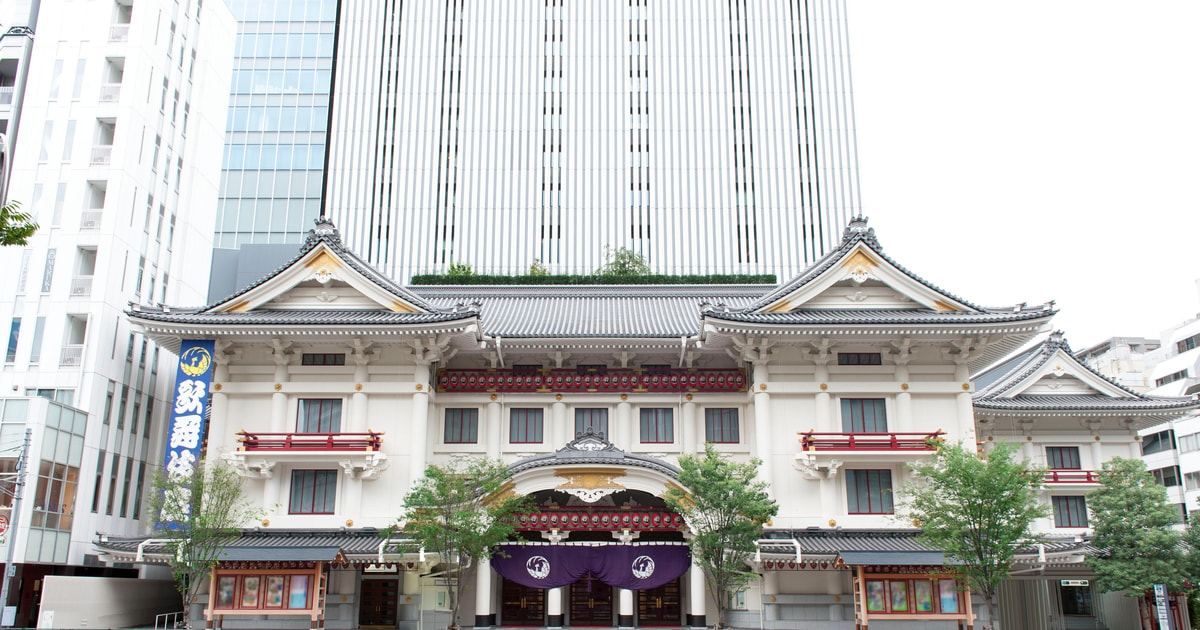
If you’re planning a trip to Tokyo, Kabuki-za is one of the most memorable ways to experience Japanese culture firsthand. GetYourGuide offers English-friendly Kabuki-za tickets and guided experiences, including options with headset translation and pre-show introductions for first-time viewers.
👉 Check Kabuki-za Tickets on GetYourGuide
This section may contain affiliate links. Booking through them costs you nothing extra and helps support this site.


コメント
コメント一覧 (2件)
[…] あわせて読みたい The Key Features of Kabuki: Mie, Kumadori, Hanamichi, and Stage Mechanisms A complete overview of kabuki’s defining features: mie, kumadori, the hanamichi runway, the revolving stage, live music, and lavish costum […]
[…] the sound that accompanies it, and how to spot it on stage. あわせて読みたい The Key Features of Kabuki: Mie, Kumadori, Hanamichi, and Stage Mechanisms A complete overview of kabuki’s defining features: mie, kumadori, the hanamichi runway, the […]