One concept sits underneath almost everything distinctive about kabuki: kata (型) — the fixed, codified forms that govern how an actor moves, stands, gazes, speaks, and paces a performance. Understanding kata is the fastest way to deepen how you watch a kabuki stage.
What Is Kata?
Kata refers to the standardized “correct form” an actor follows when performing — covering everything from physical movement and posture to gaze, line delivery, and pacing. Over more than 400 years, kabuki has accumulated a body of movement considered beautiful, expression considered clear, and gesture considered symbolically appropriate to a given role, all preserved and passed down as kata. Far from being arbitrary rules kept “just because they’re traditional,” kata is essentially kabuki’s aesthetic philosophy made physical.
Why Does Kata Exist?
It Establishes a Standard of Beauty
Kabuki is, at its core, an art of beauty. Movements considered beautiful have survived as kata, refined further by each generation of actors — giving audiences a shared sense of “this movement is beautiful” or “this gesture fits the character.”
It Makes the Story Easier to Follow
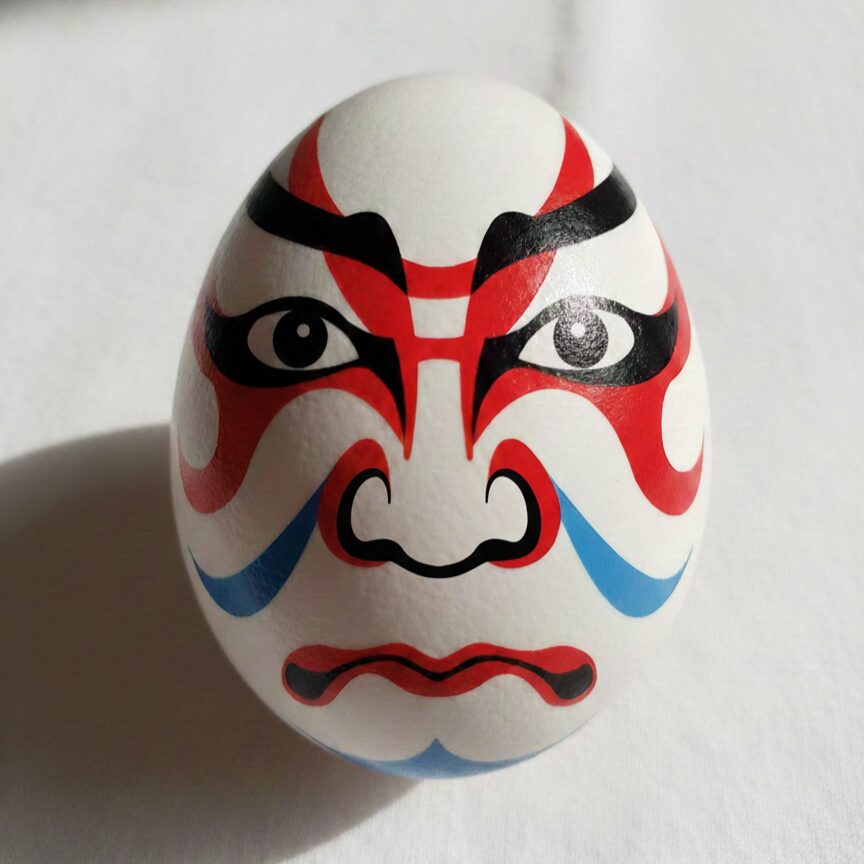
Kata carries meaning. Recognizing conventions like mie, roppō, or kumadori makeup lets an audience read a character’s intent almost instantly — kata functions as a kind of visual signal system built directly into the performance.
It Allows Technique to Be Passed Down Accurately
Kabuki is built around family-based artistic lineages. Kata is what allows technique to be transmitted precisely across generations — the Ichikawa family’s aragoto, the Kataoka family’s wagoto, and so on, each preserved as a distinct body of kata specific to that lineage.
Some Major Categories of Kata
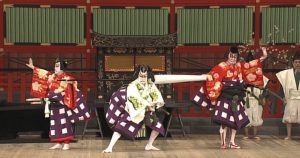
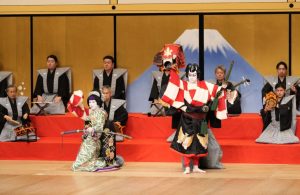
Kabuki’s most iconic conventions — mie (the frozen, dramatic pose), roppō (the exaggerated, powerful exit walk), and kumadori (symbolic face makeup) — are all forms of kata, each covered in depth in their own dedicated guides on this site. Beyond these headline examples, kata extends into subtler territory too:
Hikkomi (Exit Kata)
Hikkomi refers to the kata governing how an actor leaves the stage — and even an exit carries a character’s personality and the story’s emotional afterglow. An aragoto exit is powerful and forceful; a wagoto exit is soft and gentle; an onnagata exit is graceful. The manner of an exit alone communicates a character’s nature and the mood of the scene.
Tachimawari (Stylized Combat)
Kabuki’s combat scenes are built on their own kata — rhythmic, visually composed sequences designed to look beautiful and carry real impact despite no blow actually landing. These sequences demand serious physical skill, and are always a major highlight for audiences.
Kata Differs by Role Type
Kabuki kata isn’t one-size-fits-all — it demands an entirely different physical vocabulary depending on the role. Posture, gait, gaze, even the angle of the fingers all shift to embody how a given character experiences the world:
- Samurai roles — low center of gravity, economical, purposeful movement
- Townsperson roles — light, brisk, grounded in everyday life
- Courtesan roles — meaning carried even in the angle of a fingertip or the tilt of the hips
- Aragoto roles — bold, exaggerated, larger-than-life movement
- Wagoto roles — soft, flowing, understated movement
These aren’t simply different acting choices — they form a complete system for physically expressing a character’s way of life, values, and inner nature. Actors absorb this vocabulary from childhood, inheriting their family and school’s particular aesthetic sensibility, then refining it into a form suited to their own body over a lifetime of performance.
Onnagata Kata
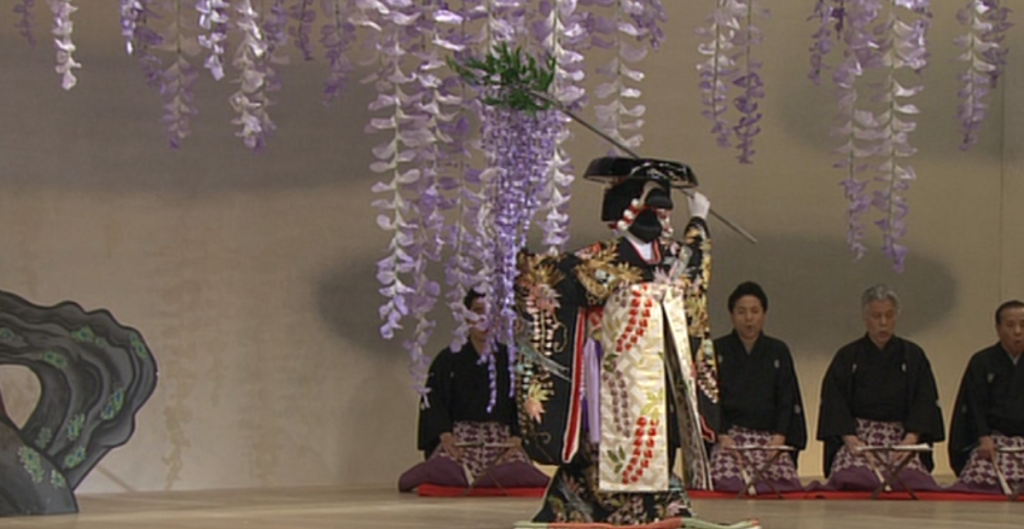
Onnagata kata governs how female roles are performed — abstracting a sense of femininity down to the exact center of gravity, stride length, and angle of the fingertips. Rather than a literal imitation of how real women move, it’s a deliberately stylized aesthetic ideal of femininity, expressed through details like a shortened stride, weight held slightly back, softened hand movement, and a lowered gaze — together expressing the spirit, dignity, and emotional nuance of a female role, not merely surface femininity.
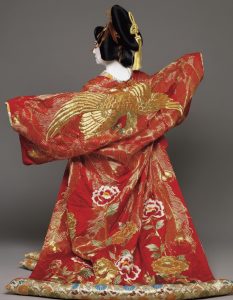
Tachiyaku Kata
Tachiyaku kata governs male roles, and shifts dramatically depending on a character’s status, personality, and way of life — a samurai carries a low center of gravity, a townsman moves lightly, and a villain’s posture is deliberately distorted to reflect a twisted nature. Each of these variations is itself a distinct, codified body of kata.
Frequently Asked Questions
- Is kata just a strict rulebook actors must follow exactly?
-
Not quite — kata is a shared foundation of form, but individual actors and acting families bring their own subtle interpretation within it, which is why the “same” kata can look different from performer to performer.
- Do all acting families use the same kata?
-
No — different families preserve their own distinct kata traditions, such as the Ichikawa family’s aragoto style versus other families’ wagoto traditions, each passed down within that lineage.
- Why does even exiting the stage have its own kata?
-
Because an exit is part of the storytelling — how a character leaves the stage communicates their personality and the emotional afterglow of the scene, so it’s treated with the same formal attention as any other moment.
Summary
Kata is the invisible architecture holding up everything distinctive about kabuki — a centuries-old system of codified movement, gesture, and pacing that turns physical performance into a language the audience can read. Once you start noticing kata, a kabuki stage stops looking like simple spectacle and starts reading as a densely coded, deeply intentional art form.
Related Reading

🎭 Want to See Kabuki Live?
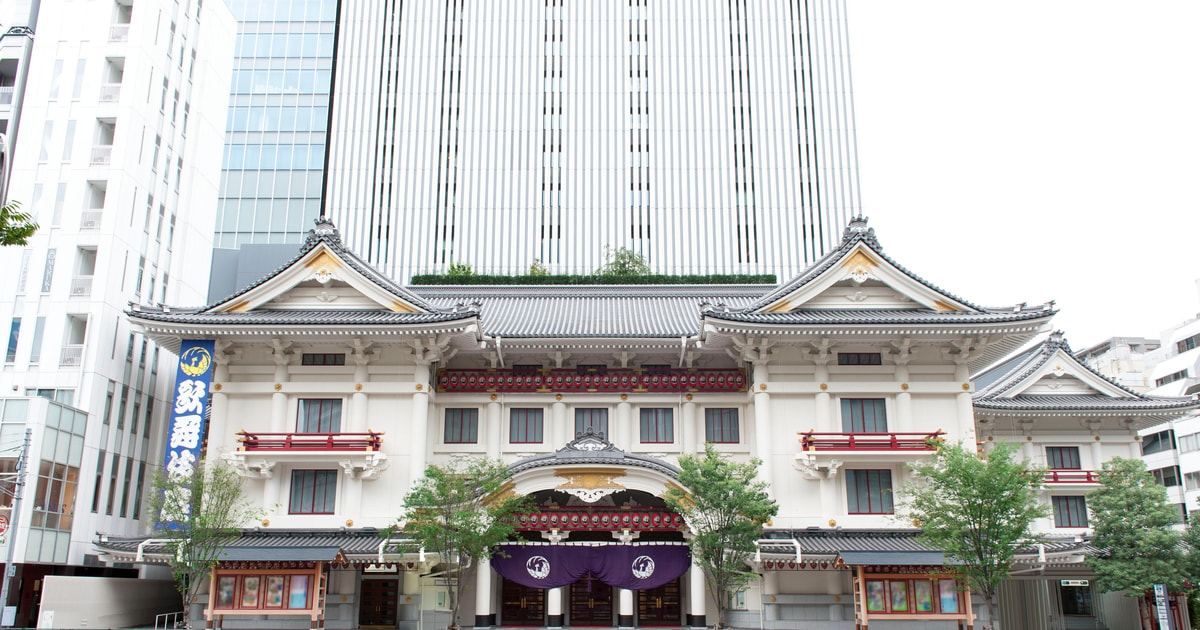
If you’re planning a trip to Tokyo, Kabuki-za is one of the most memorable ways to experience Japanese culture firsthand. GetYourGuide offers English-friendly Kabuki-za tickets and guided experiences, including options with headset translation and pre-show introductions for first-time viewers.
👉 Check Kabuki-za Tickets on GetYourGuide
This section may contain affiliate links. Booking through them costs you nothing extra and helps support this site.
コメント
コメント一覧 (2件)
[…] あわせて読みたい What Is Kata (型) in Kabuki? The Codified Forms Behind Every Movement Kata is the foundation of kabuki’s aesthetic: codified movement, gesture, and pacing passed down for 400+ years. Learn what kata means and wh […]
[…] あわせて読みたい What Is Kata (型) in Kabuki? The Codified Forms Behind Every Movement Kata is the foundation of kabuki’s aesthetic: codified movement, gesture, and pacing passed down for 400+ years. Learn what kata means and why […]