
On a snowy night, a young girl races up a fire watchtower ladder to save the boy she loves. Yagura no Oshichi (“Oshichi at the Watchtower”) is one of kabuki’s most celebrated dance scenes — formally the “Fire Watchtower Scene” from Date Musume Koi no Higanoko, a dance work built around the legend of Yaoya Oshichi.
Who Was Yaoya Oshichi?
Yaoya Oshichi is believed to have been a real teenage girl living in early Edo-period Japan — the daughter of a greengrocer in Edo’s Hongō district, said to have committed arson out of desperation to reunite with the young man she loved, and executed by burning as punishment.
Her story became widely known after being featured in Kōshoku Gonin Onna (“Five Women Who Loved Love”), and from there captured the public imagination, inspiring numerous kabuki and puppet-theater (bunraku) adaptations over the centuries. Among these, the most famous by far is the “Fire Watchtower Scene” from Date Musume Koi no Higanoko — commonly known simply as Yagura no Oshichi — depicting Oshichi racing up a watchtower on a snowy night to save her lover, now regarded as one of kabuki’s defining scenes.
While the real historical incident centered on arson, kabuki reshaped the story around a different idea: a girl willing to break the law for love — transforming it into a dazzling, dreamlike dance piece far removed from the grim historical record.
What Is Date Musume Koi no Higanoko?
Date Musume Koi no Higanoko is a kabuki dance depicting the single-minded devotion of Oshichi’s love. Originally incorporating elements of puppet theater, its second half is famous for ningyō-buri — where the actor moves exactly like a Bunraku puppet, manipulated as if by unseen puppeteers. The “Fire Watchtower Scene,” commonly known simply as Yagura no Oshichi, remains the piece’s most celebrated section, prized for the way it fuses a young girl’s passionate devotion with an almost dreamlike theatrical beauty.
Synopsis
Osugi has located the whereabouts of the “Amakuni dagger,” a treasured blade that Oshichi’s beloved Kichisaburō has been desperately searching for. Oshichi wants to deliver it to him as quickly as possible — but night has fallen, and the town’s gates are already locked.
In Edo, sounding the fire watchtower drum for any reason other than an actual fire is strictly forbidden — but doing so is also the only way to force the gates back open. Torn between saving the one she loves and the severe punishment that would follow breaking the law, Oshichi ultimately makes her choice: she climbs the watchtower through falling snow.
Taking up the drumsticks, she strikes the watchtower drum — and the sealed gates immediately swing open. Oshichi then receives the Amakuni dagger from Osugi and rushes off toward Kichisaburō. Nothing, it turns out, can extinguish a love burning this fiercely.
Characters
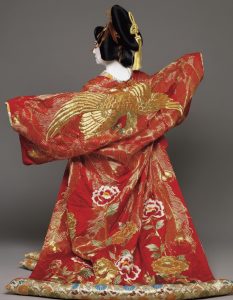
Oshichi — a girl devoted entirely to Kichisaburō, who breaks the law and climbs the fire watchtower to save him. Her ascent through the snow and the moment she strikes the drum form the scene’s central image; in the latter half, her intense love and dreamlike beauty are expressed through Bunraku-style ningyō-buri movement.
Kichisaburō — a young temple page whom Oshichi loves, in truth the son of a samurai family searching for his household’s treasured Amakuni dagger. In the Fire Watchtower Scene, he’s the reason Oshichi risks everything.
Osugi — a woman who locates the missing dagger and entrusts it to Oshichi, setting the entire chain of events in motion.
The puppeteers — appearing during the ningyō-buri section, manipulating Oshichi as though she were a Bunraku puppet, creating a weightless, otherworldly quality on stage.
Why Does Oshichi Climb the Ladder?
Oshichi climbs the watchtower ladder for one reason: to save Kichisaburō. In Edo-period Japan, the town gates were locked each night, and the only way to force them open again was to sound the fire watchtower drum — a signal reserved strictly for actual emergencies.
Sounding it under any other circumstance carried a severe penalty. Oshichi is trapped between two impossible outcomes — save the person she loves, or face punishment for breaking the law — and chooses love anyway. That stark choice, a girl defying the rules of her entire society for the sake of romantic devotion, is exactly why this scene has endured for so long.
Highlights
The Beauty of Ningyō-buri
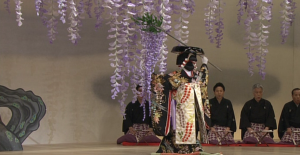
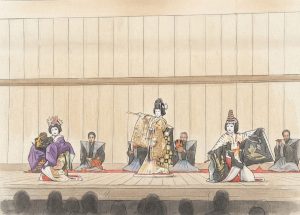
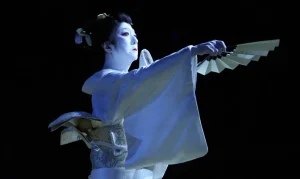
The scene’s greatest highlight is its ningyō-buri sequence. Midway through, Bunraku-style vocal narration takes over, and Oshichi’s movement transforms into something resembling an actual puppet. Manipulated by two visible puppeteers, she moves with a weightless, dreamlike quality that’s genuinely impressive to watch. Since Bunraku’s female puppets traditionally have no visible feet, a strict convention of ningyō-buri is that the performer’s feet must never be shown — watch for the distinctive gliding, foot-concealing steps for an added layer of appreciation.
Climbing the Ladder Through Falling Snow
Oshichi’s ascent up the fire watchtower through falling snow is one of kabuki’s most iconic images. Striking a mie pose atop the tall ladder before beating the drum makes for a strikingly composed visual — a delicate young girl who, for love, fears neither danger nor punishment, her intensity expressed entirely through the act of climbing itself.
The Moment She Returns to Being Human
At the peak of the climb, just as she’s about to strike the bell in a moment of pure desperation, Oshichi shifts from “puppet” back into a flesh-and-blood “human being.” The dreamlike world that had defined the scene suddenly gives way to raw, immediate emotion — a striking finale driven entirely by the explosive energy of a girl consumed by love.
Frequently Asked Questions
- Is Yaoya Oshichi based on a real person?
-
Yes — she’s believed to have been a real girl in early Edo-period Japan, though the kabuki adaptation reshapes her story around themes of devoted love rather than the historical arson incident itself.
- What is “ningyō-buri”?
-
It’s a kabuki performance technique where an actor moves as though controlled by unseen Bunraku puppeteers, creating a weightless, doll-like quality — used to striking effect in the second half of this scene.
- Why was sounding the watchtower drum considered a crime?
-
In Edo-period Japan, the drum was reserved strictly for signaling fires, since sounding it also forced the town’s locked gates to reopen. Using it for any other reason carried a severe penalty — which is exactly the risk Oshichi takes.
Summary
Yagura no Oshichi transforms the tragic legend of a real Edo-period girl into a dazzling, dreamlike showcase of devotion — climbing a snow-covered watchtower for love, drifting between puppet and human through ningyō-buri, and ending in a burst of raw emotion. It remains one of kabuki’s defining portraits of a love fierce enough to defy the law itself.
Related Reading

🎭 Want to See Kabuki Live?
If you’re planning a trip to Tokyo, Kabuki-za is one of the most memorable ways to experience Japanese culture firsthand. GetYourGuide offers English-friendly Kabuki-za tickets and guided experiences, including options with headset translation and pre-show introductions for first-time viewers.
👉 Check Kabuki-za Tickets on GetYourGuide

This section may contain affiliate links. Booking through them costs you nothing extra and helps support this site.






コメント