Flip through a kabuki program and you might spot the term shosagoto attached to a piece, distinct from the straight dramatic plays around it. It’s a term worth knowing on its own — a specific, technical word for a particular way of telling a story on stage, not just another word for “dance.”
What Shosagoto Actually Means
Shosagoto (所作事) refers to kabuki pieces built around shosa — physical gesture and movement — where the story is carried primarily through choreographed movement set to music, with spoken dialogue kept to a bare minimum or eliminated entirely. Rather than actors talking through a plot, a shosagoto piece tells its story almost entirely through the combination of music, sung narration, and the performer’s physical expression.
How It Differs From “Buyō” in General Use
Kabuki dance as a broad category is generally referred to as buyō, but shosagoto specifically describes the technique and convention of minimal-dialogue, movement-driven storytelling within that category — a more precise term for how a piece functions dramatically, rather than simply labeling it as “a dance.” In practice, the two terms overlap heavily in everyday conversation, but shosagoto carries a slightly more technical, classical connotation, often used specifically when discussing a piece’s formal structure or its place within kabuki’s broader dramatic tradition.
The Music Carrying the Story
Since dialogue is minimized or absent, the specific musical style accompanying a shosagoto piece does a huge amount of the storytelling work. Nagauta, kabuki’s most common shamisen-based style, tends to favor bright, celebratory pieces and is the accompaniment behind many of the art form’s best-known dance works. Tokiwazu and kiyomoto, by contrast, lean more heavily into sung narration with a stronger storytelling quality, often better suited to pieces carrying real emotional or dramatic weight. Recognizing which musical style is playing gives you an immediate sense of the tone a shosagoto piece is going for, well before its choreography confirms it.
Well-Known Shosagoto Pieces to Start With
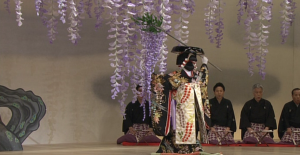
Many of kabuki’s most beloved works fall squarely into this category. Fuji Musume and Sagi Musume are both classic onnagata shosagoto pieces built entirely around a solo dancer’s expression of longing and transformation. Renjishi and Shunkyō Kagamijishi, kabuki’s celebrated lion dances, are shosagoto at their most physically dynamic. Even the comic Takatsuki, built around a servant’s slapstick mix-up with a pair of wooden clogs, qualifies — proof that the category spans everything from quiet, contemplative solo dance to broad, crowd-pleasing comedy, all united by the same core technique of movement carrying the story.

Why the Distinction Matters
Understanding shosagoto as a distinct storytelling convention — not just “a dance number” — changes how you watch one. Rather than waiting for dialogue to explain what’s happening, the entire meaning of a scene is being communicated through the music’s rhythm and mood, the performer’s gaze and posture, and the pacing of their movement. Watching a shosagoto piece well means listening as much as watching, since the sung narrative accompanying the music is often doing the narrative heavy lifting that dialogue would otherwise carry.
Shosagoto in a Kabuki Program
Shosagoto pieces frequently appear as a change of pace within a longer program, offering a different rhythm and texture from the dialogue-driven drama surrounding them — a moment where the visual and musical elements of kabuki take center stage without the need to track a complex plot. For a first-time viewer, a well-chosen shosagoto piece can actually be one of the easier parts of a program to follow, since the emotional throughline is carried by tone and movement rather than dense dialogue.
Frequently Asked Questions
- Is shosagoto the same thing as buyō?
-
They overlap closely — buyō is the general term for kabuki dance, while shosagoto more specifically describes the technique of telling a story through minimal-dialogue, movement-driven performance.
- Does a shosagoto piece have any dialogue at all?
-
Very little, if any. The story is instead carried through sung narration, instrumental music, and the performer’s physical expression rather than spoken lines.
- Is shosagoto a good starting point for kabuki beginners?
-
Often, yes — since the meaning comes through tone, music, and movement rather than complex dialogue, a well-chosen shosagoto piece can be genuinely easy to follow even without deep prior knowledge.
- Does the type of music tell me anything about a shosagoto piece?
-
Yes — nagauta tends to signal bright, celebratory pieces, while tokiwazu and kiyomoto lean toward stronger narrative and emotional weight, giving you a sense of tone before the choreography even begins.
Summary
Shosagoto is kabuki’s term for storytelling stripped down to movement and music — a precise, technical word worth recognizing on a program, and a genuine invitation to watch differently, letting rhythm and gesture carry the story instead of waiting for dialogue to explain it.
Related Reading
🎭 Want to See Kabuki Live?
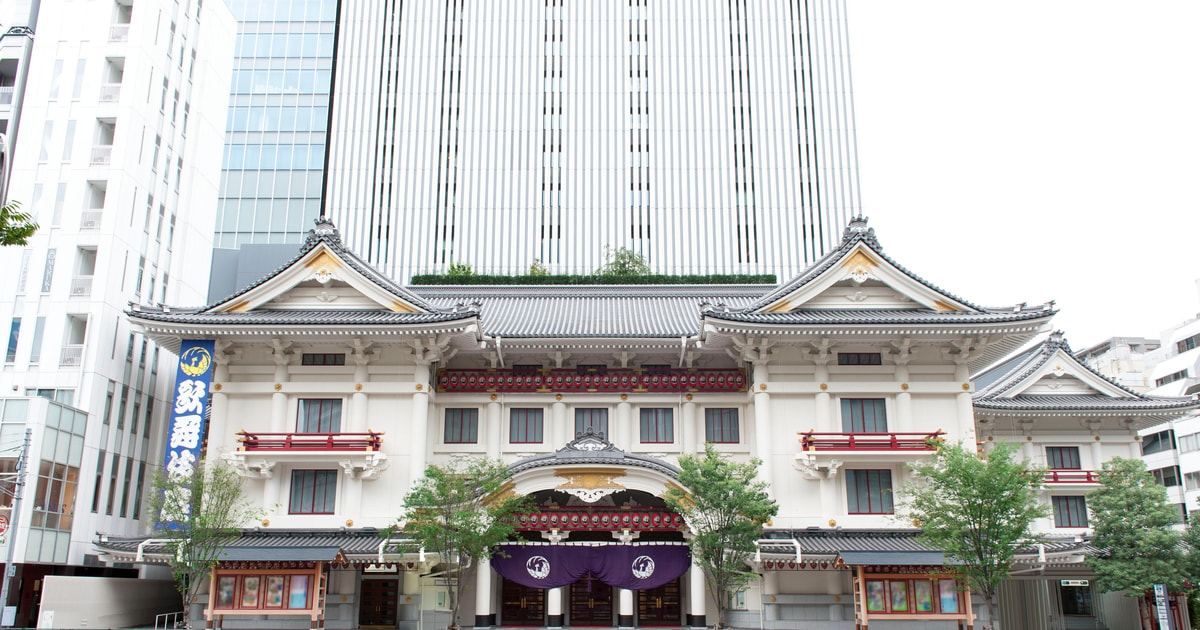
If you’re planning a trip to Tokyo, Kabuki-za is one of the most memorable ways to experience Japanese culture firsthand. GetYourGuide offers English-friendly Kabuki-za tickets and guided experiences, including options with headset translation and pre-show introductions for first-time viewers.
👉 Check Kabuki-za Tickets on GetYourGuide
This section may contain affiliate links. Booking through them costs you nothing extra and helps support this site.





コメント