
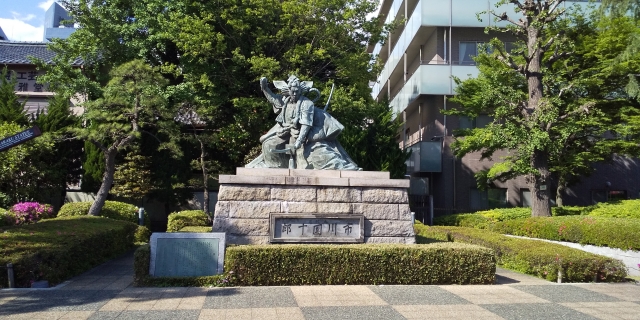
Kabuki is a traditional Japanese theatrical art form built around bold visual spectacle, live music, and centuries of inherited technique — one of the most immediately striking performing arts anywhere in the world, and one of the most rewarding things a visitor to Japan can experience firsthand. Here’s a complete starting point for understanding what it actually is.
The Short Definition
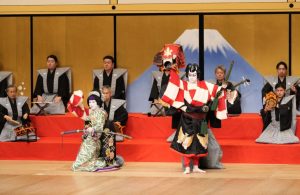
Kabuki is a form of Japanese theater dating back to 1603, performed entirely by male actors (including in female roles), combining scripted drama, dance, and live traditional music into a single, highly stylized performance. It’s known for its dramatic freeze poses, bold face makeup, elaborate costumes, and a distinctive runway stage that extends directly through the audience — all built on a foundation of technique passed down within hereditary acting families for roughly four centuries.
Where Kabuki Came From
Kabuki traces back to a single historical figure: Izumo no Okuni, a performer who staged bold, unconventional dances in Kyoto around 1603, giving the art form both its origin and its name (from kabuku, meaning to lean or behave unconventionally). What followed was a turbulent early history — women were banned from the stage in 1629, followed by a ban on young male performers in 1652 — that ultimately shaped kabuki into the all-male tradition it remains today, giving rise to onnagata, the specialized art of male actors performing female roles.

The Core Features That Define Kabuki
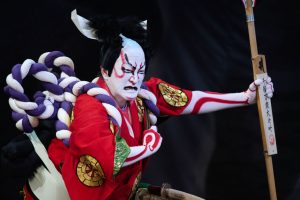
Mie: The Signature Freeze Pose
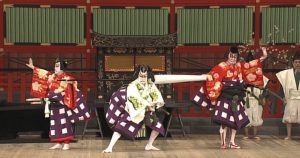
At a scene’s emotional peak, an actor holds a dramatic, precisely composed pose — kabuki’s most iconic and recognizable technique.
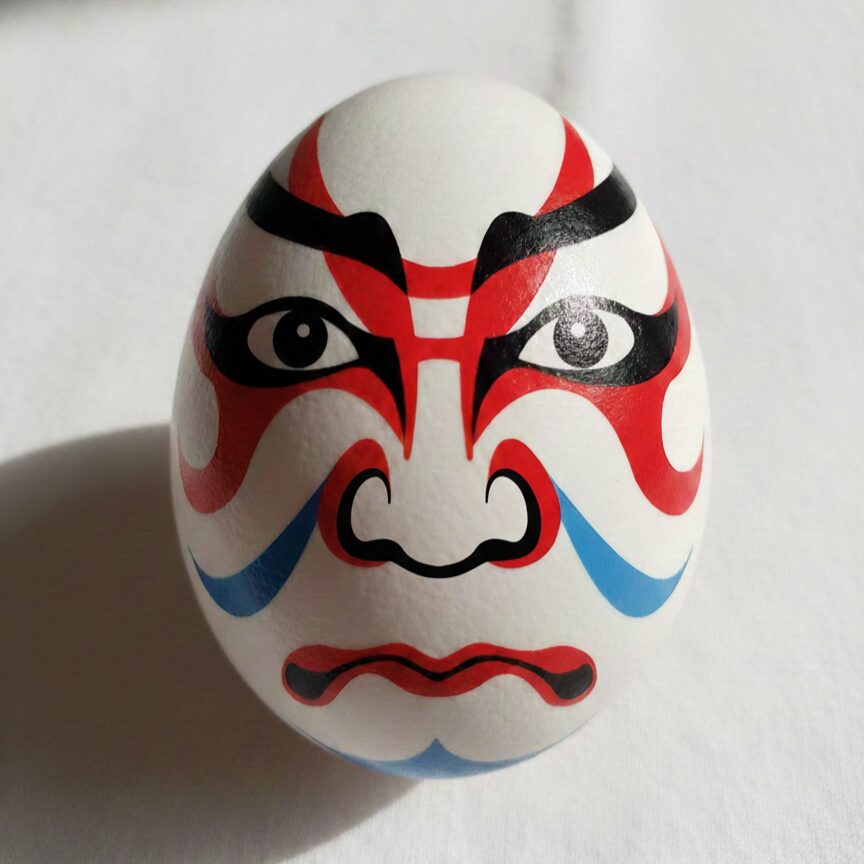
Kumadori: Symbolic Face Makeup
Bold, colorful makeup patterns instantly communicate a character’s morality and nature — red for heroism, blue for villainy, and more.

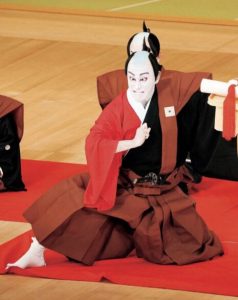
Onnagata: Male Actors in Female Roles
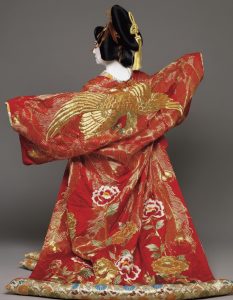
A specialized performance tradition where male actors express an abstracted, codified version of femininity rather than literal imitation.
The Hanamichi: A Runway Through the Audience
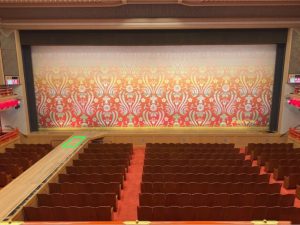
A raised walkway extending from the stage through the seating, used for major entrances and exits performed at close range to the crowd.
Aragoto and Wagoto: Two Core Performance Styles
Aragoto is bold and larger-than-life, built around superhuman heroes; wagoto is soft and romantic, built around gentle, refined characters. Together, they represent the two poles of kabuki’s male-role acting spectrum.
The Family System Behind It All
Kabuki has been organized around hereditary acting families for roughly four centuries — the Ichikawa, Onoe, Nakamura, and Bandō lines among them — each carrying its own artistic specialties, signature plays, and formal name-succession traditions passed from parent to child. Understanding a performer’s family lineage is one of the fastest ways to understand what you’re actually watching on stage.

Recognized Around the World
Kabuki was formally inscribed by UNESCO on its Representative List of the Intangible Cultural Heritage of Humanity in 2008, and its influence has reached well beyond Japan — even shaping the theories of pioneering Soviet filmmaker Sergei Eisenstein, who cited kabuki as a direct influence on his approach to cinematic montage.

How to Actually Start Watching
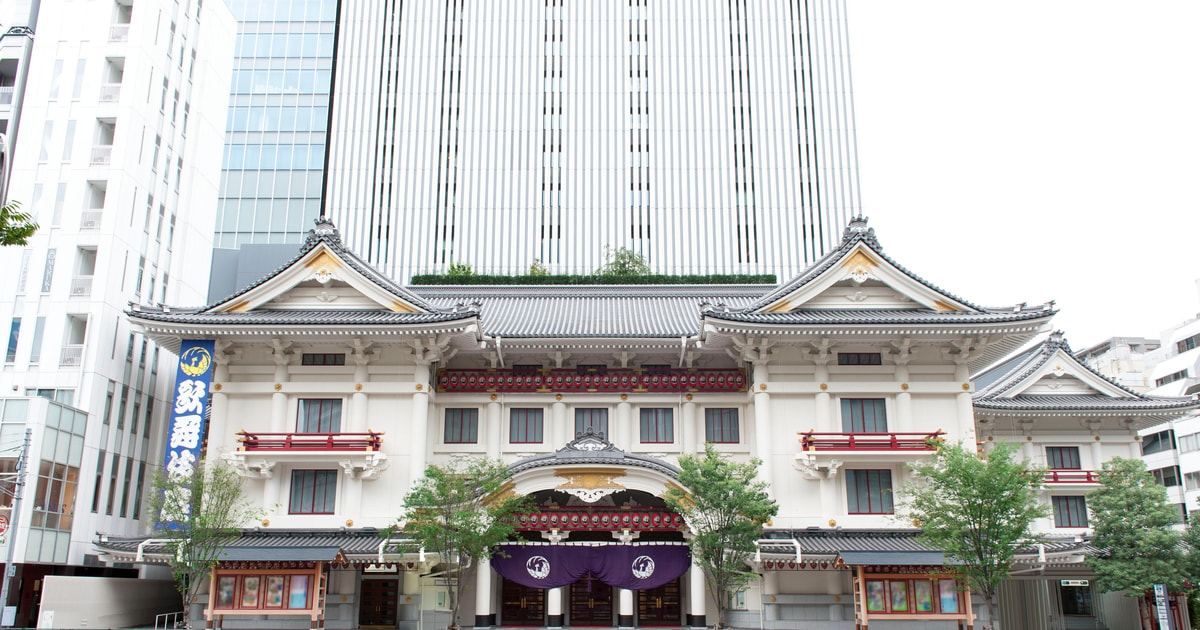
You don’t need any background knowledge to enjoy a first performance. Kabukiza in Tokyo offers English earphone guides explaining the plot in real time, and its makumi (single-act) seating system lets you try just one act for a fraction of the price of a full program — a genuinely low-commitment way to see if kabuki clicks for you before booking a longer visit.
Frequently Asked Questions
- How old is kabuki?
-
Kabuki dates back to around 1603, when Izumo no Okuni began staging her bold, unconventional dance performances in Kyoto, making it roughly 400 years old.
- Why do only men perform in kabuki?
-
Women were banned from the kabuki stage in 1629, and a follow-up ban on young male performers in 1652 left adult men as the only option — the origin of onnagata, the specialized tradition of male actors in female roles.
- Do I need to understand Japanese to enjoy kabuki?
-
No — Kabukiza offers English earphone guides with real-time explanations, and kabuki’s visual spectacle is genuinely enjoyable even without following every line of dialogue.
Summary
Kabuki is a nearly 400-year-old Japanese theatrical tradition built on bold visual technique, inherited family artistry, and a genuine sense of spectacle that needs no translation to land. Whether you’re drawn in by a single dramatic mie pose or a full afternoon at Kabukiza, this guide is your starting point — follow the links throughout to go as deep as you’d like, one feature at a time.
🎭 Want to See Kabuki Live?
If you’re planning a trip to Tokyo, Kabuki-za is one of the most memorable ways to experience Japanese culture firsthand. GetYourGuide offers English-friendly Kabuki-za tickets and guided experiences, including options with headset translation and pre-show introductions for first-time viewers.
👉 Check Kabuki-za Tickets on GetYourGuide
This section may contain affiliate links. Booking through them costs you nothing extra and helps support this site.






コメント