Kotohoi de Kagekiyo (壽三升景清) is an ambitious tōshi kyōgen — a “through-play” that links four separate Kagekiyo-themed pieces from the Kabuki Jūhachiban (Kan’u, Kamahige, Kagekiyo, and Gedatsu) into a single sweeping narrative, tracing one legendary warrior’s entire life from triumph to spiritual release.
Who Is Akushichibyōe Kagekiyo?
Kagekiyo is a Taira warrior who appears in The Tale of the Heike, remembered as a legendary “rebel hero” who refused to accept the Taira clan’s defeat, continuing to resist the victorious Minamoto long after the war’s end. The “aku” in his name doesn’t mean “evil” — it’s closer to “fierce” or “formidable,” describing a warrior of overwhelming intensity.
In kabuki, Kagekiyo is developed as a defining aragoto figure, his boldness and superhuman strength emphasized throughout. But he’s never simply a strongman — the plays built around him also explore his suffering as a defeated warrior, his obsessive refusal to let go of the fallen Taira cause, and, eventually, a spiritual journey toward release. Kotohoi de Kagekiyo is an attempt to present that entire arc — the full picture of who Kagekiyo really is — across four linked plays.
The Four Plays That Make Up Kotohoi de Kagekiyo
Kan’u
Kan’u establishes Kagekiyo’s invincible heroism, drawing a parallel to the legendary Chinese general Guan Yu (Kan’u in Japanese) to elevate him beyond a mere warrior into something closer to a mythic figure. It’s a bold, aragoto-driven opening chapter.
Kamahige
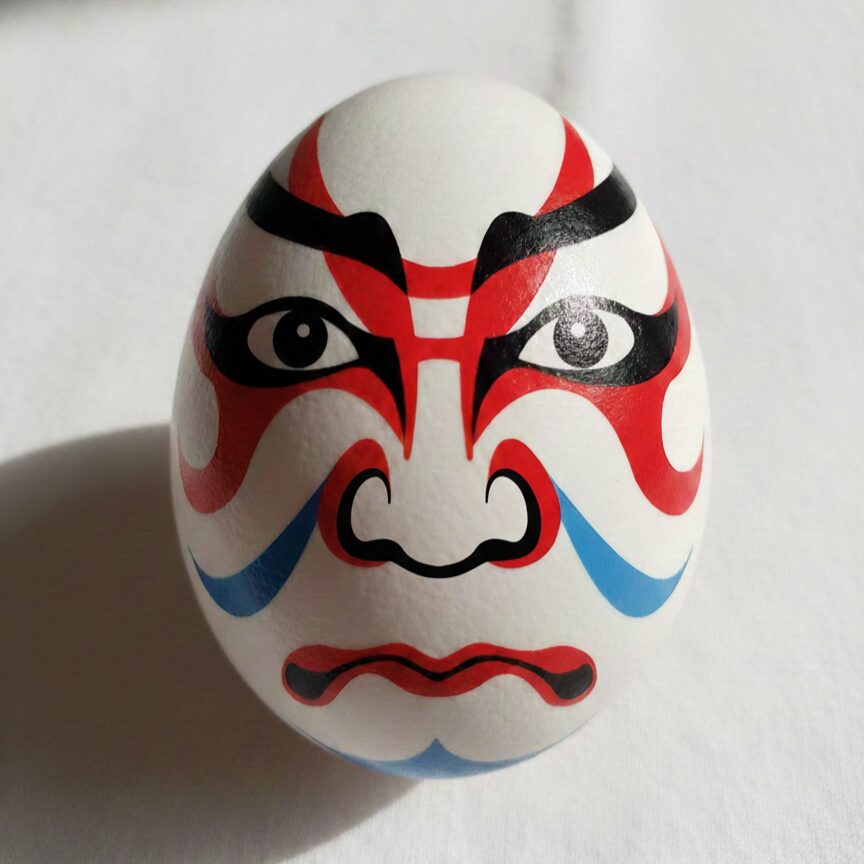
Kamahige distills aragoto’s pure spectacle: Kagekiyo knowingly walks into a Minamoto trap disguised as a shave, and proves unkillable even when a massive sickle is swung at his throat. It’s a showcase of larger-than-life invincibility, full of striking mie poses and bold kumadori makeup.
Kagekiyo
This chapter moves past raw spectacle into Kagekiyo’s inner life. Through a dialogue with Chichibu no Shōji Shigetada, the story explores what a hero who has lived entirely for vengeance comes to realize about his own path — a genuinely introspective turn after two chapters of pure physical intensity.
Gedatsu
Gedatsu (“Release”) closes the cycle: the obsessive hero finally lets go of his doubts and turns toward spiritual liberation. In Kotohoi de Kagekiyo, this isn’t just an ending — it’s framed as the culminating summary of Kagekiyo’s entire life.
A “Revolving Lantern” of Memory
The kabuki actor Ichikawa Ebizō, who has spoken about the concept behind this production, described it with a striking image: rather than simply stringing together four separate Kagekiyo plays, the whole piece is imagined as Kagekiyo’s own life flashing before him at the moment of death — his memories unspooling like a revolving lantern. That framing is what elevates Kotohoi de Kagekiyo from a simple compilation into something more like a single, unified meditation on a life fully lived.
Kagekiyo and Akoya
No discussion of Kagekiyo is complete without mentioning Akoya, generally depicted as his lover or wife. She appears in the separate, famous play Akoya (not included in this particular through-play), in which she’s questioned about Kagekiyo’s whereabouts and proves her honesty by performing on koto, shamisen, and kokyū — a celebrated scene known as the “koto interrogation,” among the most admired set pieces in all of kabuki.
While Akoya itself isn’t part of Kotohoi de Kagekiyo, understanding Kagekiyo’s relationship with her adds real depth to the character — a rebel hero who is also, unmistakably, a man capable of being deeply loved.
Highlights
Four Plays, One Sweeping Vision
Reconstructing four normally independent plays into a single life story is a genuinely unusual undertaking, even within the Kabuki Jūhachiban — the ambition of the format is itself a major draw.
Aragoto at Full Intensity
This is a showcase of everything aragoto does best: bold stylized combat, exaggerated physical strength, dramatic mie poses, and striking kumadori makeup throughout.
Frequently Asked Questions
- Are these four plays normally performed together?
-
No — Kan’u, Kamahige, Kagekiyo, and Gedatsu are typically independent pieces. Kotohoi de Kagekiyo is a special reconstruction linking them into one continuous narrative of Kagekiyo’s life.
- Is Akoya part of this production?
-
No — Akoya is a separate, famous play about Kagekiyo’s lover, not included in this particular four-play cycle, though it deepens understanding of his character.
- What does “aku” in Kagekiyo’s name mean?
-
It doesn’t mean “evil” — it describes a fierce, formidable warrior, reflecting Kagekiyo’s overwhelming strength and intensity rather than villainy.
Summary
Kotohoi de Kagekiyo reimagines four separate Kabuki Jūhachiban plays as a single sweeping account of one legendary warrior’s life — from invincible heroism through obsession to spiritual release, framed as memories flashing before him at the end. It’s an ambitious way to experience the full depth of one of kabuki’s most enduring aragoto figures.
Related Reading
🎭 Want to See Kabuki Live?
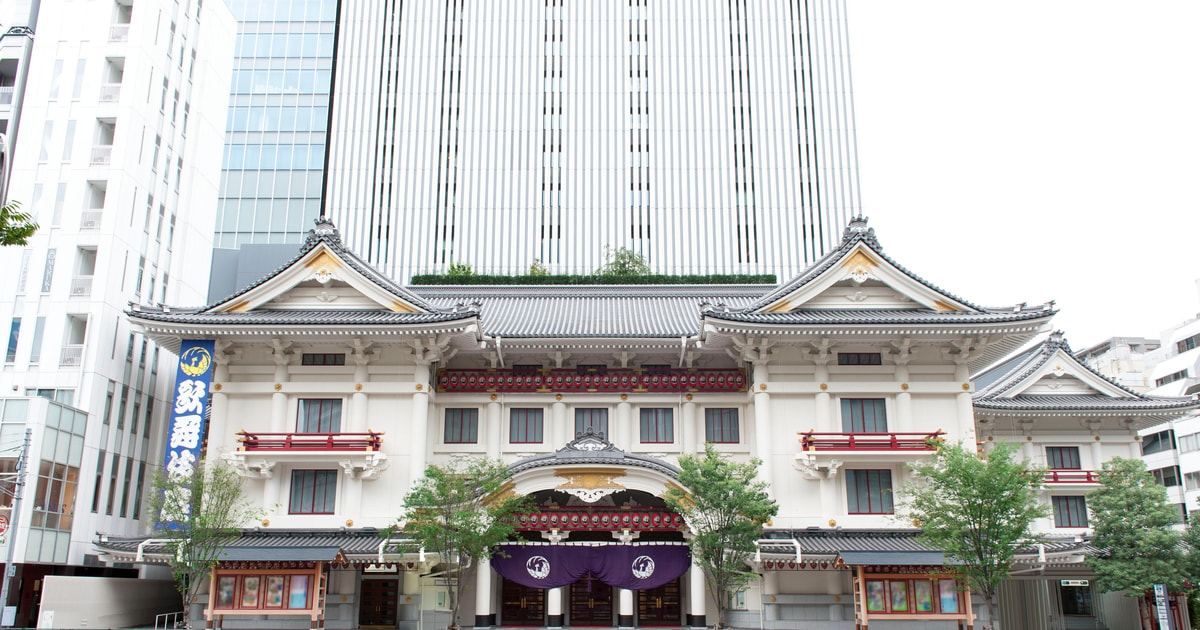
If you’re planning a trip to Tokyo, Kabuki-za is one of the most memorable ways to experience Japanese culture firsthand. GetYourGuide offers English-friendly Kabuki-za tickets and guided experiences, including options with headset translation and pre-show introductions for first-time viewers.
👉 Check Kabuki-za Tickets on GetYourGuide
This section may contain affiliate links. Booking through them costs you nothing extra and helps support this site.


コメント
コメント一覧 (1件)
[…] あわせて読みたい Kotohoi de Kagekiyo: Four Kabuki Jūhachiban Plays, One Warrior’s Entire Life This ambitious through-play links four Kabuki Juhachiban pieces into one sweeping account of the legendary warrior Kagekiyo’s lif […]