Kumo no Hyōshimai (“The Spider’s Rhythmic Dance”) packs an enormous range of kabuki’s core appeal into one piece — a bewitching female transformation, an archaic sung-dance form, and a booming, larger-than-life act of raw physical force. Built around the legend of Minamoto no Yorimitsu’s band of warriors defeating the earth spider, it’s one of kabuki’s most satisfying introductions to the art form’s full range.
Synopsis (Three-Minute Summary)
Rumors spread of a strange presence haunting a long-abandoned imperial residence. Minamoto no Yorimitsu travels there with his retainers to investigate.
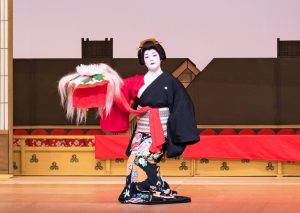
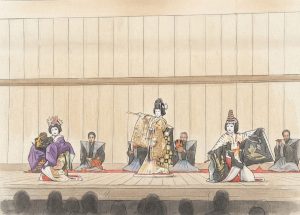
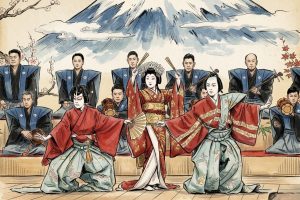
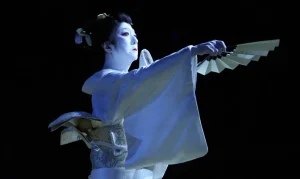
There, a beautiful shirabyōshi dancer named Tsumagiku appears, captivating the room with an enchanting dance that seems to bend the atmosphere itself to her will.
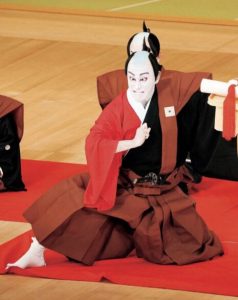
Yorimitsu and his retainer Watanabe no Tsuna join her in a rhythmic dance — until Tsuna notices something wrong in her shadow cast against the light: it’s the shadow of a spider. Her true nature is exposed.
Cornered, Tsumagiku releases countless threads and vanishes, reappearing moments later transformed into the terrifying spirit of a giant spider. As Yorimitsu’s party struggles against her in a fierce battle, the mighty Sakata no Kintoki arrives, overwhelming the spider spirit with sheer physical force and driving the confrontation to its decisive close.
Characters
Minamoto no Yorimitsu — a Heian-period warrior and the lead figure confronting the earth spider. Composed and courageous, he’s momentarily captivated by Tsumagiku’s bewitching dance, but ultimately sees through her disguise and leads the charge against her.
Watanabe no Tsuna — one of Yorimitsu’s four legendary retainers, brave and quick-witted. He’s the one who dances alongside Tsumagiku and notices the telltale spider shadow, making him key to exposing her identity.
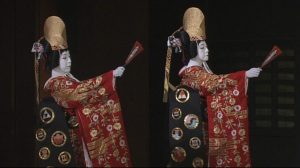
Tsumagiku / The Spirit of the Giant Spider — the true form of the “monster” haunting the residence. She appears first as an elegant shirabyōshi dancer, bewitching Yorimitsu with her graceful movement, before revealing her true identity as a spider spirit that preys on humans. The role combines elegance and menace in equal measure, making full use of an onnagata performer’s range and transformation technique.
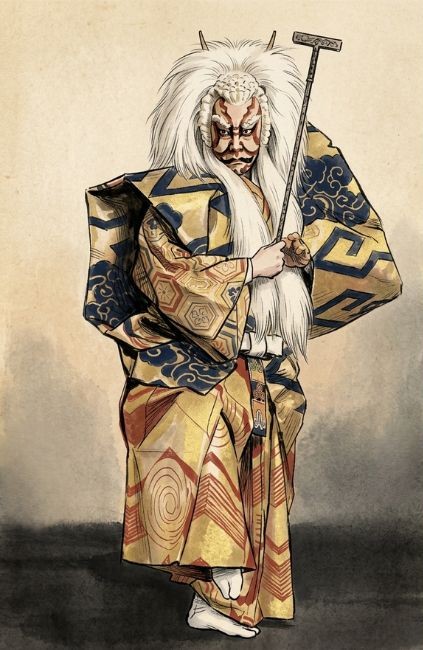
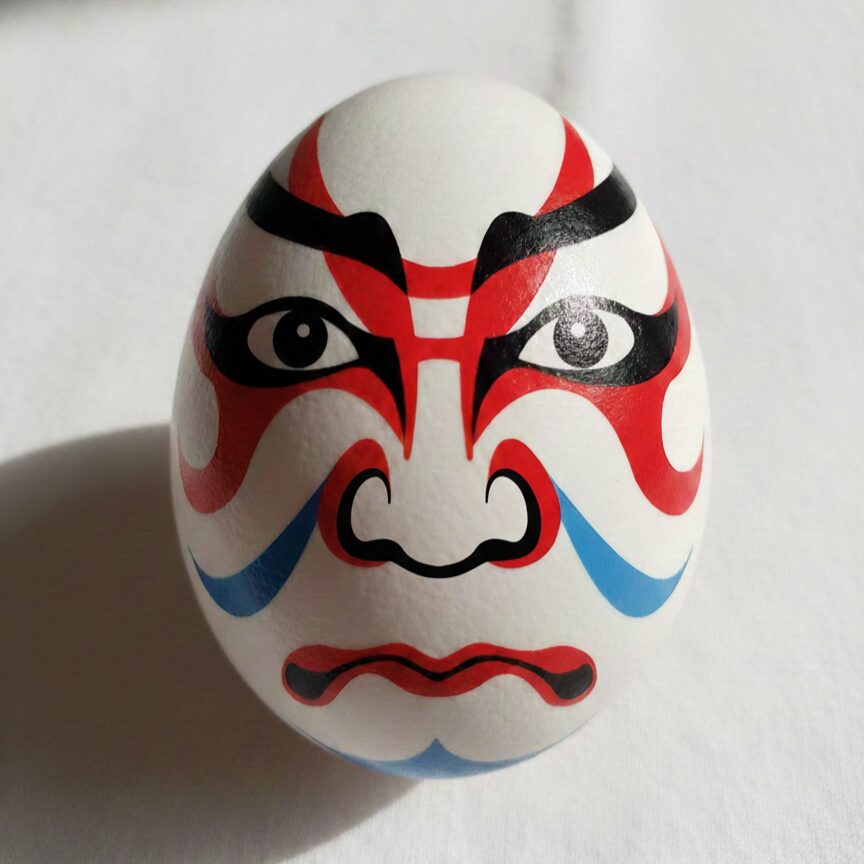
Sakata no Kintoki (the oshimodoshi role) — another of Yorimitsu’s four legendary retainers, a hero of unmatched physical strength. He appears late in the piece as the oshimodoshi — the figure who forcibly repels the supernatural threat — and turns the entire mood of the stage in an instant. Dressed in bold aragoto costume, complete with red kumadori makeup, coiled paper “power cords,” and a heroic sash, his forceful confrontation with the spider spirit is the piece’s most exhilarating moment.
The Four Legendary Retainers of Yorimitsu — Yorimitsu’s elite band of warriors. Watanabe no Tsuna and Sakata no Kintoki carry most of the action here, but the group as a whole represents kabuki’s classic image of an elite squad devoted to slaying demons and monsters.
The cast list stays deliberately simple — lord, retainers, and monster — which is exactly what lets the piece’s dance, transformation, and combat sequences take center stage without distraction.
Highlights
Tsumagiku’s Dramatic Shift from Beauty to Terror
The piece’s greatest draw is Tsumagiku’s transformation — from a supple, alluring dance into the spirit of a monstrous spider. Rather than simple horror, her menace grows directly out of her beauty, showcasing an onnagata performer’s technique at its most impressive.
Hyōshimai: An Archaic Sung Dance Form
The dance style the title refers to, hyōshimai, involves reciting lines in rhythm while dancing — closer to sung storytelling than ordinary choreography. Story and rhythm merge into one, drawing the audience in with a distinctive momentum. It’s a rare surviving trace of kabuki’s earliest performance style.
Oshimodoshi: The Thrill of Pure Aragoto
The role that arrives late in the piece, known as oshimodoshi, is performed here by Sakata no Kintoki. Red kumadori makeup signals justice, courage, and youthful vigor; white paper “power cords” and a heroic sash signal aragoto’s raw physical force; and a distinctive head-shaking gesture across five beats conveys overwhelming power. The moment he physically forces the spider spirit back from the hanamichi runway onto the main stage is pure, uncomplicated satisfaction — kabuki’s formal beauty and visceral thrill combined into one image.
A Complete Course, Start to Finish
What makes this piece so satisfying is that it never leans too heavily on any single element. It opens with pure visual beauty, then something starts to feel subtly wrong, and the true identity is revealed. From there, the mood shifts entirely into intense combat, before closing with an unapologetic display of raw aragoto power. Beautiful, then unsettling, then thrilling, then overwhelming — the emotional intensity builds in exactly the right order, which is exactly why the piece is often described as a complete “full course” of everything kabuki does best.
Quick Glossary
Shirabyōshi — a professional female entertainer skilled in song and dance.
Hyōshimai — a technique where an actor recites lines in rhythm while dancing, an archaic style dating back to kabuki’s earliest era, notable for how tightly rhythm and performance are fused together.
Oshimodoshi — a role type in which a hero forcibly repels a monster or vengeful spirit through sheer physical power, a signature showcase moment within aragoto.
Jorō-gumo — a spider spirit that disguises itself as a beautiful woman to lure and prey on humans, a classic symbol in Japanese folklore of beauty and horror intertwined.
Frequently Asked Questions
- What is the single biggest highlight of this piece?
-
Tsumagiku’s transformation into the spider spirit, and Sakata no Kintoki’s oshimodoshi sequence near the end — the piece’s beauty and intensity both peak in these two moments.
- What does “hyōshimai” mean, and why is it in the title?
-
Hyōshimai is an archaic technique of dancing while reciting lines in rhythm, dating back to kabuki’s early history — the piece takes its name from the dance Yorimitsu and Tsuna perform with Tsumagiku before her true nature is revealed.
- Is this a good piece for someone new to kabuki?
-
Yes — the cast is small and the plot is simple, but the piece still covers dance, transformation, and dynamic aragoto combat, making it an efficient, satisfying introduction to several of kabuki’s defining elements at once.
Summary
Kumo no Hyōshimai lets you experience beauty, dread, physical power, and rhythm all in one sitting. Its story is simple and easy to follow, yet the depth of its performance style and stagecraft rewards close attention — making it an ideal choice for anyone who wants a single piece that captures what kabuki is really about.
Related Reading
🎭 Want to See Kabuki Live?
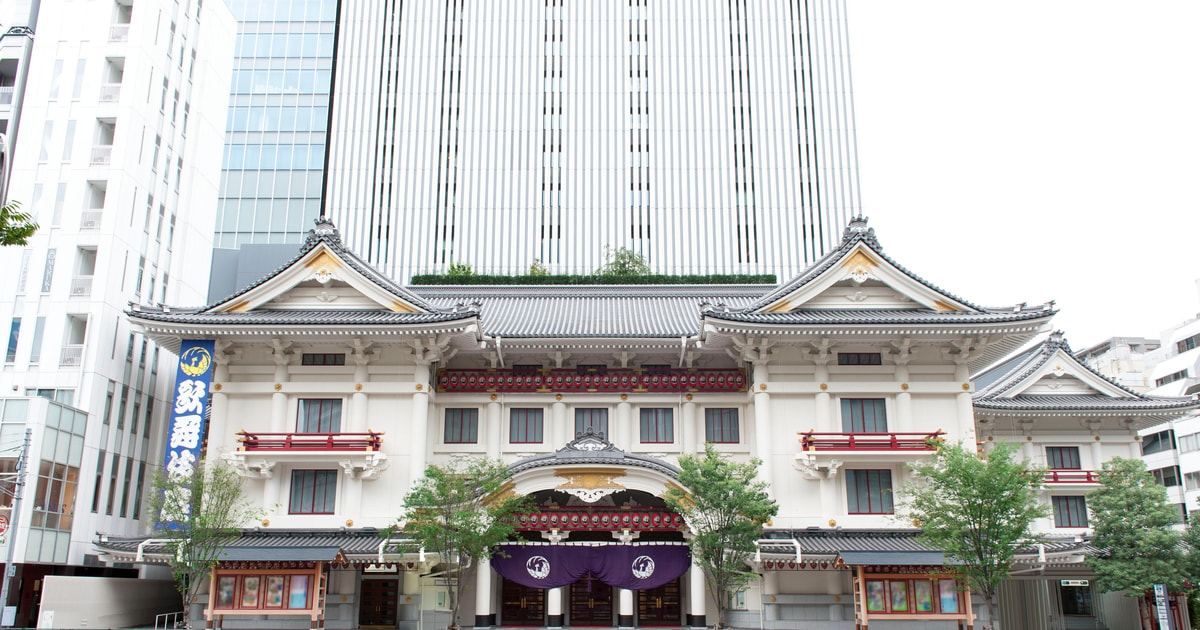
If you’re planning a trip to Tokyo, Kabuki-za is one of the most memorable ways to experience Japanese culture firsthand. GetYourGuide offers English-friendly Kabuki-za tickets and guided experiences, including options with headset translation and pre-show introductions for first-time viewers.
👉 Check Kabuki-za Tickets on GetYourGuide
This section may contain affiliate links. Booking through them costs you nothing extra and helps support this site.




コメント