
Ranpei Monogurui (蘭平物狂) is one of kabuki’s most beloved set pieces — a scene built on cascading twists, a startling “madness” performance, and a jaw-dropping large-scale combat finale. The plot can feel dense on a first pass, so this guide breaks down the story, highlights, and staging in a way that’s easy to follow.
What Is Ranpei Monogurui?
The full title of this play is Yamato Gana Ariwara Keizu, and true to the word “keizu” (“family lineage”) in its name, the story is built around a succession dispute tied to imperial politics in the early Heian period. The plot is intentionally intricate — every character’s true loyalties and motives are gradually revealed, only to be overturned again by a deeper truth, again and again. The audience is repeatedly led to believe they’ve reached the real story, only to have that understanding pulled out from under them.
Originally a five-act play, only the fourth act survives in regular performance today — the “Yukihira Residence” and “Inner Garden” scenes, now performed together under the popular title Ranpei Monogurui. Its combination of layered scheming with genuinely thrilling combat has earned it comparisons to a kind of “kabuki spy thriller.”
Synopsis
The Yukihira Residence Scene
Ariwara no Yukihira has returned to the capital after being pardoned from exile in Suma, but remains despondent, unable to forget a fisherwoman named Matsukaze he fell in love with there. His wife, Lady Minase, arranges for their retainer Ranpei to bring back a woman named Oriku who closely resembles Matsukaze, hoping it will lift Yukihira’s spirits.
Ranpei returns with Oriku and her husband Yomosaku, coaching them to simply agree with whatever Yukihira says. Yukihira, convinced Oriku is truly Matsukaze, calls her close — but is interrupted by news that a suspicious intruder has fled, and orders Ranpei’s son, Shigezō, rather than Ranpei himself, to give chase. Ranpei is puzzled by being passed over, unaware that Yukihira is deliberately avoiding him due to a strange affliction: the sight of a drawn sword sends Ranpei into fits of madness.
When Yukihira, irritated by Ranpei’s distraction, draws his sword, Ranpei immediately collapses into a genuine fit of madness — babbling and dancing wildly before fainting again at the sight of the blade. He recovers, apologizes, and is forgiven. Shortly after, Ranpei returns triumphantly with the captured intruder, and Yukihira rewards Shigezō with a promotion to samurai status, delighting Ranpei.
Once Shigezō leaves, Yomosaku suddenly attacks Yukihira, accusing him of killing his father — an accusation Yukihira has no memory of. Unable to personally duel Yomosaku due to a pressing secret mission, Yukihira orders Ranpei to fight in his place. During the duel, it becomes clear both men carry the same legendary sword, Amakuni — and Ranpei finally reveals the truth: his affliction was faked all along, and he is actually Yoshio, son of a man killed by Yukihira, who has been infiltrating the household seeking revenge. Yomosaku, too, reveals himself as Yoshio’s brother, and the two vow to join forces against Yukihira.
The Inner Garden Scene
The brothers’ plot is quickly discovered, and Ranpei is surrounded and badly wounded. As he searches desperately for his son Shigezō, Yukihira, Lady Minase, and two other retainers appear — revealing that Yukihira’s illness was faked as well, all part of a mission to recover a stolen imperial treasure, and that “Yomosaku” had been testing Ranpei’s true identity from the start.
The final reveal: it was Shigezō who had been ordered to capture Ranpei all along. But the son cannot bring himself to bind his own father, and the father cannot bring himself to cut down his son. Ranpei entrusts the recovered imperial treasure to Shigezō, urging him to claim the credit for its recovery. Moved by the scene, Yukihira honors Shigezō’s service and vows to restore his family’s standing. Ranpei, grateful for Yukihira’s mercy, departs with a promise to meet again — closing on a striking group mie pose.
Main Characters
Ariwara no Yukihira
A nobleman previously exiled to Suma, outwardly frail but secretly on a mission to recover a stolen imperial treasure. He tests those around him throughout the story, ultimately delivering a merciful judgment once Ranpei’s true circumstances come to light.
Ranpei (Actually Yoshio)
Yukihira’s retainer, whose “madness at the sight of a blade” turns out to be an elaborate ruse, concealing his true identity as the son of a man killed by Yukihira, infiltrating the household to seek revenge.
Shigezō
Ranpei’s son, caught between duty and love for his father in the story’s emotional climax.
Yomosaku (Actually Yoshizumi)
Revealed to be Ranpei’s own brother, secretly Ōe no Otohito, another agent working the same mission as Yukihira.
Highlights
The “Madness” Performance
Ranpei’s fit of madness at the sight of a sword — babbling, dancing wildly, and collapsing — is a genuine showcase of physical and emotional performance, made all the more striking once revealed as an act.
Layer Upon Layer of Reveals
Nearly every character in this play is hiding something, and each reveal only sets up another. That structure of constantly shifting truth is what gives the play its “spy thriller” reputation.
A Spectacular Large-Scale Combat Finale
The Inner Garden scene builds to an extended, elaborately staged combat sequence, considered one of the most technically demanding and visually thrilling in the kabuki repertoire.
A Father-Son Drama at the Core
Beneath the scheming and combat is a genuinely moving relationship: a son who can’t bind his own father, and a father who can’t bring himself to harm his son — the emotional anchor that gives the spectacle real weight.
Frequently Asked Questions
- Is Ranpei’s “madness” real?
-
No — it’s revealed to be a calculated act, part of his disguise while infiltrating Yukihira’s household to seek revenge for his father’s death.
- Is Ranpei Monogurui part of a longer play?
-
Yes — it’s the fourth act of the five-act Yamato Gana Ariwara Keizu, though only this act survives in regular performance today.
- What’s the biggest highlight for a first-time viewer?
-
The large-scale combat sequence in the finale is the most immediately spectacular moment, though the layered reveals throughout the story reward close attention too.
You might also enjoy:
Summary
Ranpei Monogurui packs hidden identities, a dazzling feigned-madness performance, and a spectacular combat finale into one tightly wound scene — with a genuinely moving father-son bond at its emotional center. Its constant, cascading reveals make it one of kabuki’s most rewarding plays to watch closely.
Related Reading
🎭 Want to See Kabuki Live?
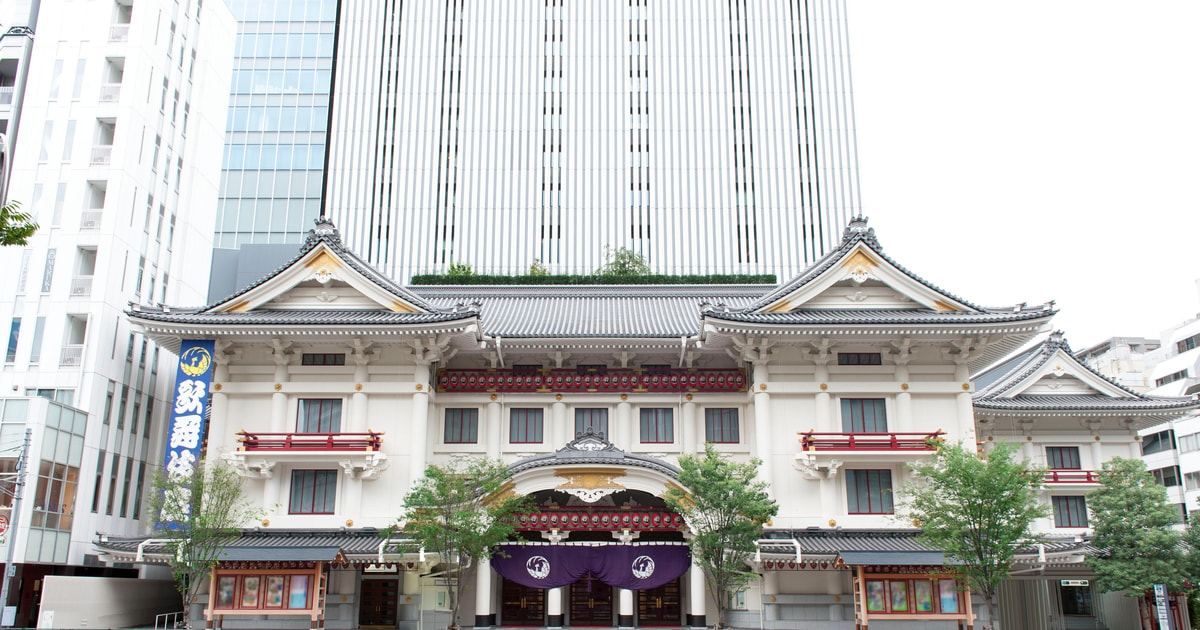
If you’re planning a trip to Tokyo, Kabuki-za is one of the most memorable ways to experience Japanese culture firsthand. GetYourGuide offers English-friendly Kabuki-za tickets and guided experiences, including options with headset translation and pre-show introductions for first-time viewers.
👉 Check Kabuki-za Tickets on GetYourGuide
This section may contain affiliate links. Booking through them costs you nothing extra and helps support this site.




コメント