Oshidori Fusuma Koi no Mutsugoto — commonly known simply as Oshidori — is a tokiwazu dance drama where a human love triangle gives way, halfway through, to a haunting tale of grief and vengeance from the spirit world. Built in two distinct halves, it moves from a lively, realistic dance to something genuinely otherworldly.
Synopsis
The Sumo Scene: A Human Rivalry in Love
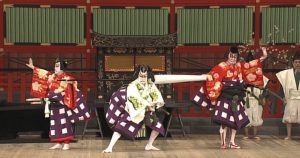
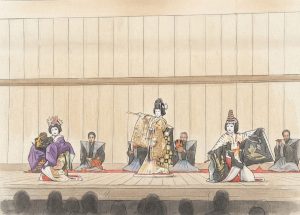
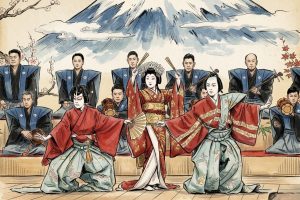
Kawazu Saburō and Matano Gorō both fall for the same courtesan, Kisegawa. To settle things, the two men agree to a sumo match, with Kisegawa serving as referee. The scene unfolds as a dance built around forty-eight classical sumo techniques, with all three characters narrating the origins of sumo through rhythmic, sung dance. Kawazu Saburō wins the match and departs together with Kisegawa — leaving the defeated Matano Gorō consumed by deep jealousy and resentment.
The Mandarin Duck Scene: Love and Vengeance Beyond the Grave
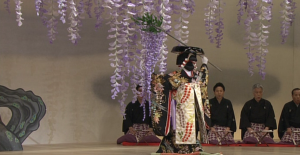
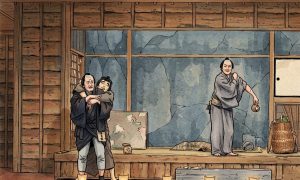
Unable to let go of his feelings, Matano Gorō recalls an old legend: drinking the blood of a male mandarin duck (oshidori) is said to induce madness. He uses this to plot against Kawazu Saburō, and the story suddenly shifts into fantastical territory as Kawazu Saburō loses his life.
Grieving the loss of her mate, the female mandarin duck’s spirit possesses Kisegawa, while the male duck’s spirit takes hold of Kawazu Saburō — reuniting the two souls as a pair once more. The mandarin duck spirits then turn on Matano Gorō, the man responsible for it all, tormenting him before finally vanishing from the stage.
Characters
Kawazu Saburō Suketai — a warrior remembered as the father of the Soga brothers from the famous Soga revenge cycle, and a celebrated sumo wrestler credited with inventing the “kawazu-gake” technique. He’s romantically involved with Kisegawa.
Matano Gorō Kagehisa — Kawazu Saburō’s friend, who also falls for Kisegawa. His jealousy sets the story’s tragedy in motion.
Kisegawa — a courtesan involved with Kawazu Saburō, who serves as referee for the sumo match and stands at the center of the romantic rivalry.
Highlights
The piece’s core appeal lies in its sudden shift from a human romantic entanglement into the spirit world. The first half, the “Sumo Scene,” is lively and grounded in realistic dance; the second half, the “Mandarin Duck Scene,” turns fantastical and deeply melancholy with the arrival of the ducks’ spirits. Particular highlights include the inventive staging that turns classical sumo forms into dance, the light rhythmic narration of the sumo origin story, the dramatic turn from human drama into the supernatural, and the beautiful, sorrowful reunion of the mandarin duck spirits.
It’s a distinctive piece that channels a tragedy born of love and jealousy through both dance and the spirit world.
Frequently Asked Questions
- Why is this piece commonly called “Oshidori”?
-
“Oshidori” means mandarin duck, referring to the pair of duck spirits whose tragic love and reunion form the emotional core of the piece’s second half.
- How is the piece structured?
-
It’s built in two parts: the “Sumo Scene,” a lively, realistic dance depicting a human love rivalry, followed by the “Mandarin Duck Scene,” a fantastical, sorrowful dance depicting the spirits of the ducks after tragedy strikes.
- Is Kawazu Saburō connected to other famous kabuki stories?
-
Yes — he’s remembered as the father of the Soga brothers, whose quest for revenge is the subject of numerous other beloved kabuki plays in the “Soga-mono” tradition.
Summary
Oshidori Fusuma Koi no Mutsugoto takes a simple human love triangle and transforms it, halfway through, into a haunting tale of loss and reunion in the spirit world. Its blend of lively sumo-inspired dance and quiet, sorrowful beauty makes it a genuinely distinctive entry in kabuki’s dance repertoire.
Related Reading
🎭 Want to See Kabuki Live?
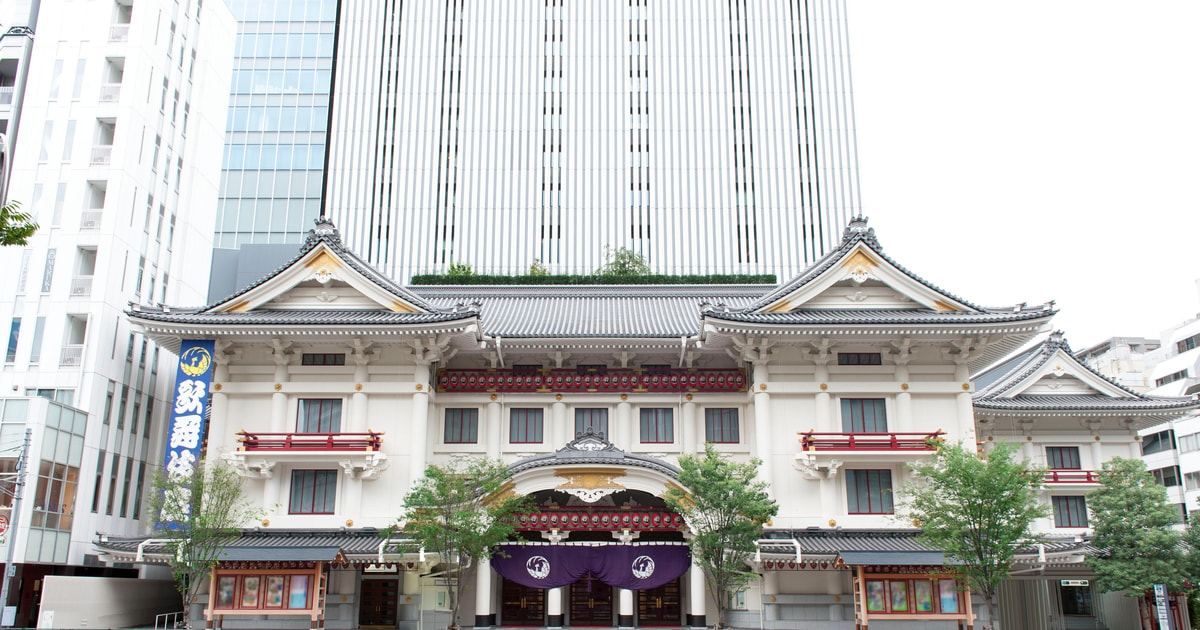
If you’re planning a trip to Tokyo, Kabuki-za is one of the most memorable ways to experience Japanese culture firsthand. GetYourGuide offers English-friendly Kabuki-za tickets and guided experiences, including options with headset translation and pre-show introductions for first-time viewers.
👉 Check Kabuki-za Tickets on GetYourGuide
This section may contain affiliate links. Booking through them costs you nothing extra and helps support this site.

コメント
コメント一覧 (1件)
[…] あわせて読みたい Oshidori Fusuma Koi no Mutsugoto Explained|A Love Triangle That Turns Into a Ghost Story A human love rivalry over sumo suddenly turns into a haunting tale of mandarin duck spirits and vengeance — the story behind t […]